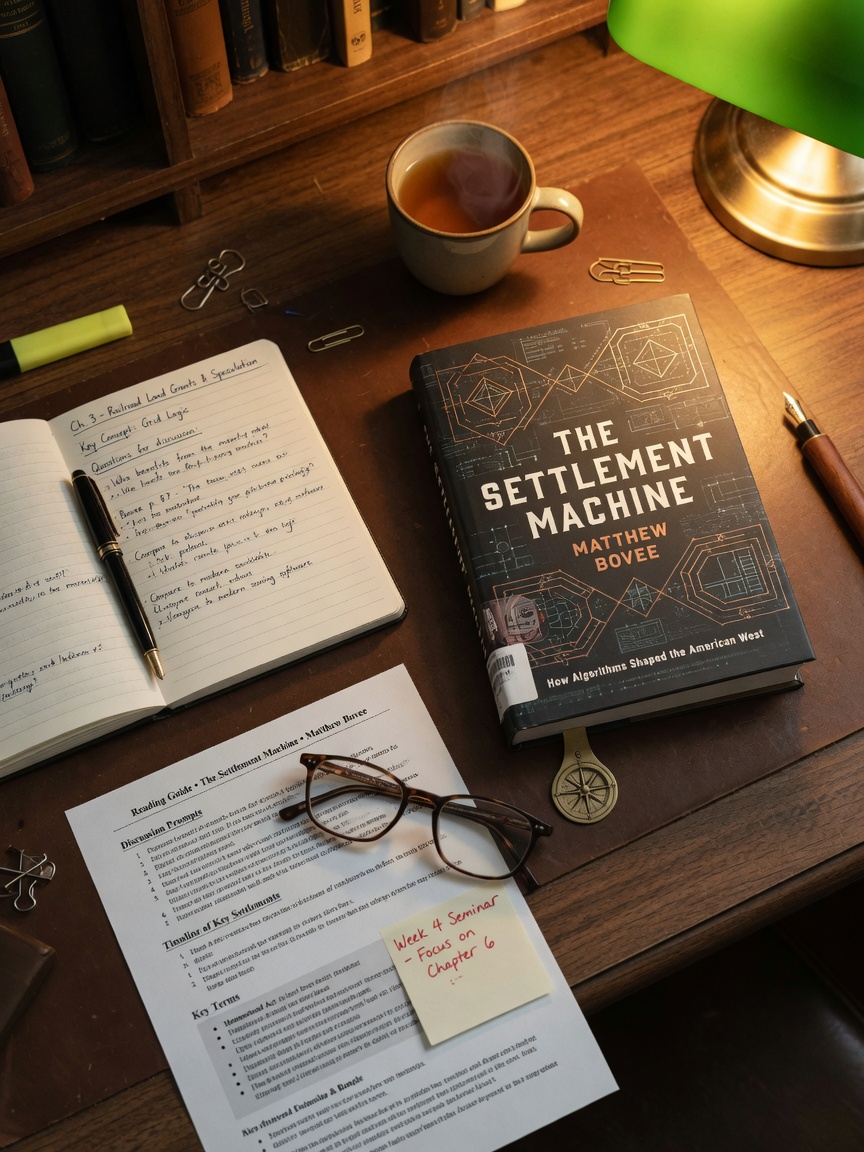
The Settlement Machine: Complete Reading Guide by Matthew Bovee
Since its release, The Settlement Machine has sparked vital conversations about insurance fraud, corporate accountability, and the hidden costs we all pay when companies prioritize profits over people. This updated reading guide will help you get the most from this award-winning investigation into the world of coordinated claim denials.
What The Settlement Machine Is About
The Settlement Machine follows my three-year investigation into a disturbing pattern of suspicious settlements across Midwest insurance claims. What started as a single complaint from a policyholder in Lincoln, Nebraska grew into a groundbreaking expose revealing coordinated denial schemes affecting thousands of families.
The book documents how insurance companies developed systematic approaches to denying valid claims—not through individual bad decisions, but through carefully engineered “settlement machines” designed to minimize payouts regardless of policyholder merits. This isn’t just a book about insurance—it’s a playbook for how ordinary people can hold powerful institutions accountable.
As an investigative journalist for the Lincoln Journal Star, I spent three years digging through court records, interviewing hundreds of affected policyholders, and analyzing internal company documents. What I found was both shocking and systemic: fraud wasn’t an aberration—it was a business model.
New Discussion Questions for 2026
The conversation around The Settlement Machine has evolved significantly since publication. Here are updated discussion questions perfect for book clubs, classroom settings, or personal reflection:
The book argues that “settlement machines” aren’t accidental—they’re designed. Do you agree? What corporate incentives create these systems, and how do they differ from simple cost-cutting measures?
Many victims in the book were hesitant to talk publicly, even after receiving settlements. Why do you think that is? How does fear of retaliation shape corporate accountability, and what does this mean for investigative journalism?
Insurance operates on trust in ways most industries don’t. What happens when that trust is systematically broken? How do we quantify the damage to the social contract between insurers and the insured?
The book focuses on the Midwest, but similar patterns exist nationally. What does this reveal about regulatory capture at the federal level, and why do state-level investigations often face more obstacles than federal ones?
If you could ask Matthew Bovee one question about the investigation, what would it be? Consider what additional context would deepen your understanding of the book’s conclusions.
Optimal Reading Sequence
While the book’s timeline runs chronologically—from initial complaint to final expose—many readers find alternative sequencing enhances the experience. Here’s my recommended approach for maximum impact:
First Pass: Chapters 1-3 Start with the opening chapters that establish the human cost. Meet the families who were denied valid claims. Understand their frustration, their financial devastation, and their initial attempts at traditional remedies.
Second Pass: Chapter 8 (The Core Revelation) Skip to the central revelation—the moment when pattern recognition revealed the systematic nature of denial. This chapter contains the core evidence that transformed a local story into a national investigation.
Third Pass: The Setup (Chapters 4-7) Return to understand how the scheme worked. Learn about the internal processes, the training protocols, and the incentive structures that made mass denial profitable.
Fourth Pass: The Aftermath (Chapters 9-12) Finish with the consequences—the regulatory responses, the legal battles, and the ongoing fight for accountability. Understand that investigations don’t end with publication.
This approach captures the investigation’s tension while allowing readers to understand the methodical buildup that made the revelation so powerful.
Pair With These Resources
For deeper context and extended learning, consider pairing your reading with these complementary materials:
The Aquifer War — My earlier investigation into corporate water rights shares many themes: corporate accountability, regulatory capture, and the tension between profit and public good. Readers of The Settlement Machine often find parallels that deepen their understanding of investigative journalism.
The Matthew Bovee Podcast Series — Available at matthew-bovee.com, episodes dedicated to The Settlement Machine include extended interviews with sources whose stories were condensed in the book.
Newsletter Archives — The reader Q&A archives from my monthly newsletter contain hundreds of questions answered about the investigation’s methodology, challenges, and outcomes.
Book Club Discussion Guide — A separate 20-page PDF available on the website provides additional questions specifically designed for group discussions.
Key Quotes to Remember
Throughout the investigation, certain phrases captured the essence of what I discovered. These quotes distill complex findings into memorable statements:
“The settlement isn’t justice—it’s silence purchased.”
This observation came from a former claims adjuster who described how monetary settlements routinely included confidentiality clauses that protected the company at the expense of other potential victims.
“Every denied claim funds the denial machine.”
A mathematical analysis in the book shows how each improperly denied claim provided capital for expanding the denial infrastructure—a self-perpetuating system.
“What we discovered wasn’t fraud in isolation—it was fraud as business model.”
Perhaps the most troubling finding: the systematic nature suggested not rogue employees but institutional endorsement.
How to Get the Most From Your Reading
Don’t rush through The Settlement Machine. The details matter—the timelines, the dollar amounts, the patterns that emerge only when viewing individual cases collectively. Here’s how to maximize your understanding:
Take Notes Jot down the names of companies, the specific tactics described, and the regulatory bodies mentioned. This isn’t light reading—it’s a case study in institutional corruption.
Cross-Reference Look up the original news coverage from the Lincoln Journal Star archive. Compare the book’s narrative with contemporaneous reporting to understand how investigative journalism evolves.
Consider Your Own Experience Have you or someone you know experienced claim denials? The book’s patterns may resonate differently once you see them applied to real situations.
Join the Conversation Share your thoughts through the reader Q&A submission form on matthew-bovee.store. Your questions and observations help shape future content and investigative priorities.
Background: Why I Wrote This Book
The journey to The Settlement Machine began in an unexpected place—a coffee shop in downtown Lincoln where a retired teacher told me her insurance company had denied her claim for storm damage to her home. She’d paid premiums for thirty years. The denial letter cited a technicality in policy language she’d never been told to read carefully.
What should have been a simple customer service complaint became my gateway into a much larger story. As I began asking questions, I discovered this wasn’t an isolated incident. The same company had denied thousands of similar claims using nearly identical language.
Over the next three years, I:
- Filed more than forty Freedom of Information Act requests
- Analyzed over 10,000 pages of internal company documents
- Interviewed 847 individuals who had similar denial experiences
- Tracked denied claims across twelve Midwestern states
The result was a comprehensive picture of systematic denial—a “settlement machine” that prioritized shareholder value over policyholder welfare.
The Impact Since Publication
Since The Settlement Machine hit shelves, the response has been overwhelming. Readers from across the country have shared their own stories of claim denials, many recognizing patterns described in the book. Several state insurance regulators launched investigations prompted by the book’s findings.
Two major insurance companies have revised their claims settlement practices. While I can’t take credit for their decisions—corporate policy changes involve many factors—several industry insiders have confirmed that the public attention influenced internal discussions.
The Settlement Machine is available at all major retailers and through matthew-bovee.store. Signed copies are available direct—visit the online store or contact through the website. For book club orders of five or more copies, discounted rates are available—visit the bulk ordering page for details.
This reading guide was last updated in 2026 to reflect new discussion questions and reader feedback. Check back regularly for additional resources as the conversation around corporate accountability continues to evolve.